Cyprus is the third-largest island in the Mediterranean and one of the easiest getaways from Israel – the flight takes well under an hour. It packs an extraordinary amount into a small area: Greek and Roman ruins, crusader castles, golden beaches, mountain villages and lively resort towns. The island has been divided since 1974 between the Republic of Cyprus in the south and Northern Cyprus. Here is a guide to the capital, Nicosia, and the island’s main cities, to help you decide where to go.
Nicosia: the capital of Cyprus
Nicosia is the last divided capital in Europe. The southern part belongs to the Republic of Cyprus, the northern part to Northern Cyprus, and visitors can cross on foot at the Ledra Street checkpoint in the heart of the old city. Inside the Venetian walls you will find narrow lanes, museums, markets and charming cafés. Do not miss the Cyprus Museum, which has the island’s finest archaeological collection. For the north of the island, see our guide to the cities of Northern Cyprus.
The coastal cities
Limassol: the cosmopolitan port
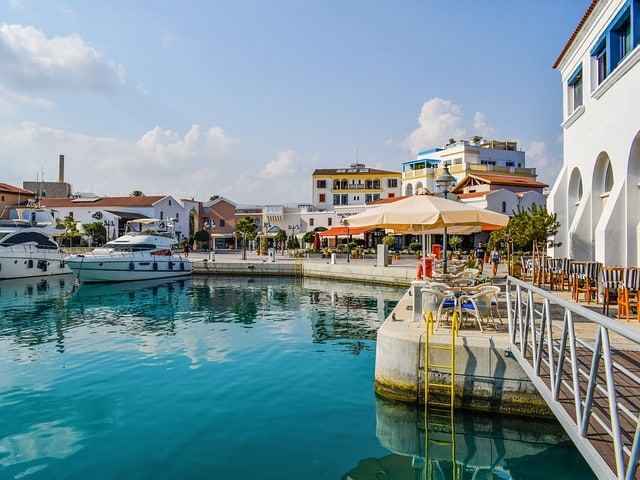
Limassol, the island’s second-largest city, combines a long seafront promenade and beaches with a modern marina, smart restaurants and a busy cultural calendar. It is known for its summer wine festival and its medieval castle, and the ancient site of Kourion is a short drive away. Read more in Limassol’s top attractions.
Paphos: a gateway to the past
Paphos, in the south-west, is a UNESCO World Heritage town with roots going back to Greek and Roman times. Its archaeological park is famous for its beautifully preserved Roman mosaics, and the Tombs of the Kings and the Roman odeon are also well worth a visit. Nearby is Aphrodite’s Rock, the legendary birthplace of the goddess of love. See our guide to things to do in Paphos.
Larnaca: gateway to the island
Larnaca, in the south-east, is home to the island’s main international airport and is where most visitors arrive. Its highlights include the Byzantine Church of Saint Lazarus, the palm-lined Finikoudes promenade and beach, and the Larnaca Salt Lake, where flamingos gather in winter. For ideas, see where to stay in Larnaca and our guide to restaurants in Larnaca.
Ayia Napa: the resort town
Ayia Napa is famous for some of the clearest water and finest beaches in the Mediterranean, including Nissi Beach and the nearby sea caves at Cape Greco. It is also known for its lively nightlife, bars and restaurants. Find out when to go in our guide to Ayia Napa’s weather and beaches.
The Troodos Mountains: nature and views
The Troodos range in the centre of the island is a different Cyprus altogether, with pine forests, waterfalls, painted Byzantine churches and traditional stone villages. In winter there is skiing on Mount Olympus, and the rest of the year it is perfect for hiking and escaping the coastal heat. See our guide to the Troodos Mountains.
Tips for travellers
- Choose your airport: Larnaca is central and handy for Nicosia, Ayia Napa and Limassol, while Paphos is closer to the west. Read Larnaca or Paphos: which to choose.
- Hire a car: public transport between cities is limited, and a car gives you much more freedom. Remember that Cyprus drives on the left – see our guide to car rental in Cyprus.
- Pick your season: summer is hot and perfect for the beach, while spring and autumn are ideal for sightseeing and hiking.
- Try the local food: halloumi, meze, souvlaki and fresh fish are all highlights.
For the best places to swim, read our guide to Cyprus’s beaches from Larnaca to Paphos.